

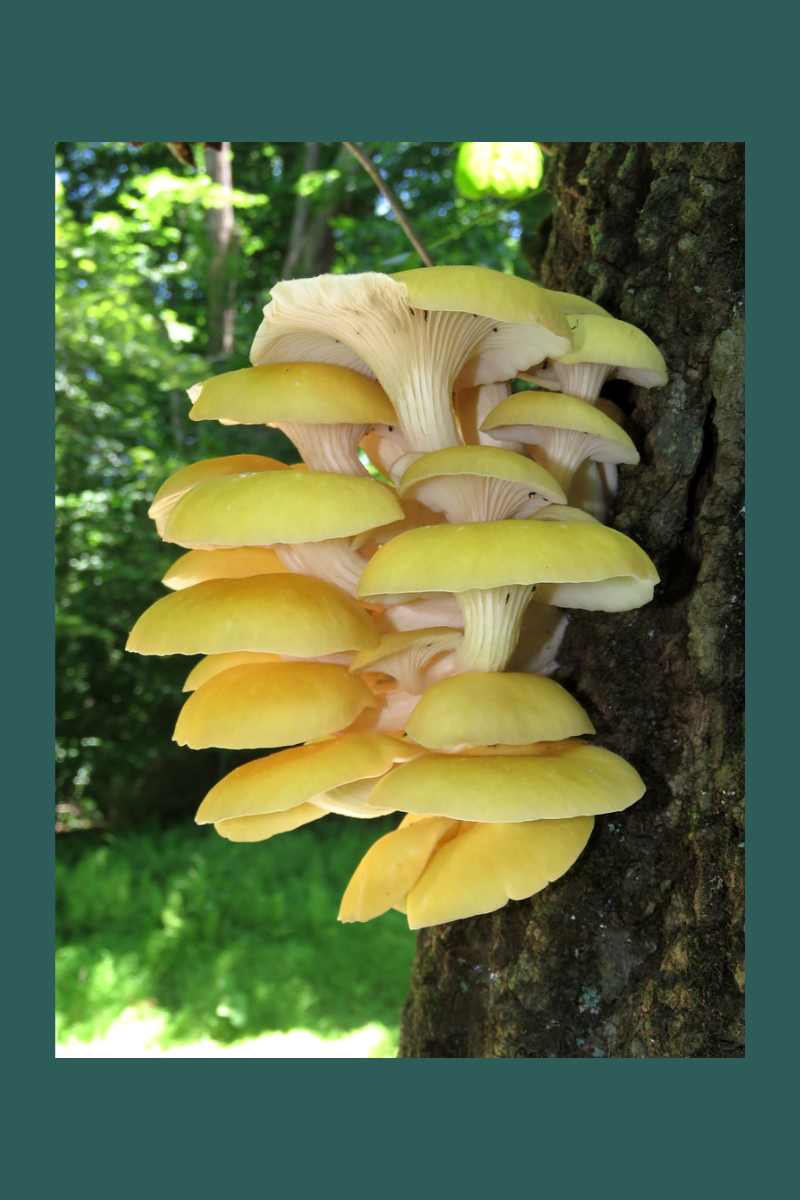
What’s the Big Deal with Yellow Oyster Mushrooms and Ergothioneine?
Hello, Locavores. Gather round. Today we are talking about a nutrient with a name that sounds like something you’d whisper into a crystal ball: ergothioneine.
Let’s call it ET. Not like the alien, though to be fair, this little compound is kind of out of this world.
So what is it? Why does it matter? And why are yellow oyster mushrooms suddenly entering the chat like “hey, we’ve been here the whole time”?
Let’s break it down, calmly, before we get excited and start sautéing things unnecessarily.
First: What Even Is Ergothioneine?
Ergothioneine is an amino acid with antioxidant properties. Your body does not make it, so you have to get it from food.
Here’s the interesting part:
Your cells have special transporters whose whole job is to actively pull ET inside and concentrate it in places where your body gets the most wear and tear:
- The brain
- The liver
- The kidneys
- The eyes
- Bone marrow
- Immune cells
So basically, your body treats ET like VIP access. If your body had TSA PreCheck, this would be it.
Source: PubMed article (PMCID: PMC9221166) shows that humans actually evolved specific transport systems just for ET. That means your body considers it important enough to prioritize.
What Does ET Do for Your Body?
Alright, science time:
Antioxidant & Cell Protector
ET helps protect cells from oxidative stress. Think of it like a tiny bouncer preventing free radicals from flipping tables.
Supports Mitochondria
You remember mitochondria. The “powerhouse of the cell.” ET helps reduce oxidative damage there, and healthier mitochondria = more stable energy.
Calms Inflammation
Because chronic inflammation is that guest who doesn’t know when to leave.
Supports Long-Term Brain Health
ET is found in high concentration in the brain and has been studied for its role in cognitive aging.
This is not woo-woo. This is published cell biology.
So Why Mushrooms?
Here’s the kicker: plants and animals don’t make ET either. Only fungi and certain types of bacteria can produce it.
Which is why mushrooms are the GOAT here.
And among mushrooms, yellow oyster mushrooms (along with other oyster species) are particularly high in ET according to multiple analyses cited in the same study.
If you’re eating yellow oysters, you’re literally one-upping your antioxidant game without even trying.
How to Use Yellow Oyster Mushrooms
Keep it simple. Yellow oysters have a delicate flavor and don’t need a whole performance.
Sauté in olive oil with salt and garlic
Add to stir-fries or noodle bowls
Crisp lightly and serve on toast with lemon
Toss into omelets or scrambles
Please do not boil them into a sad mushroom swamp. They deserve better.
The Bottom Line
Your body recognizes ergothioneine as something worth protecting and storing. Yellow oyster mushrooms are one of the richest natural sources. Eating them is one of the simplest, most delicious ways to support your cells, your brain, and your long-term health.
No supplements, no powders, no wellness cult initiation ceremony. Just mushrooms.
Stop by in a few weeks for a taste of June’s Mushrooms! June is our local mushroom enthusiast and knows a LOT about the science we’re talking about here today. Now that summer is officially over, the shrooms are back in session! Keep an eye on our produce cooler, we’re shroomin’ it up soon!
Stay curious, stay crunchy, and sauté something nice today.
MB